

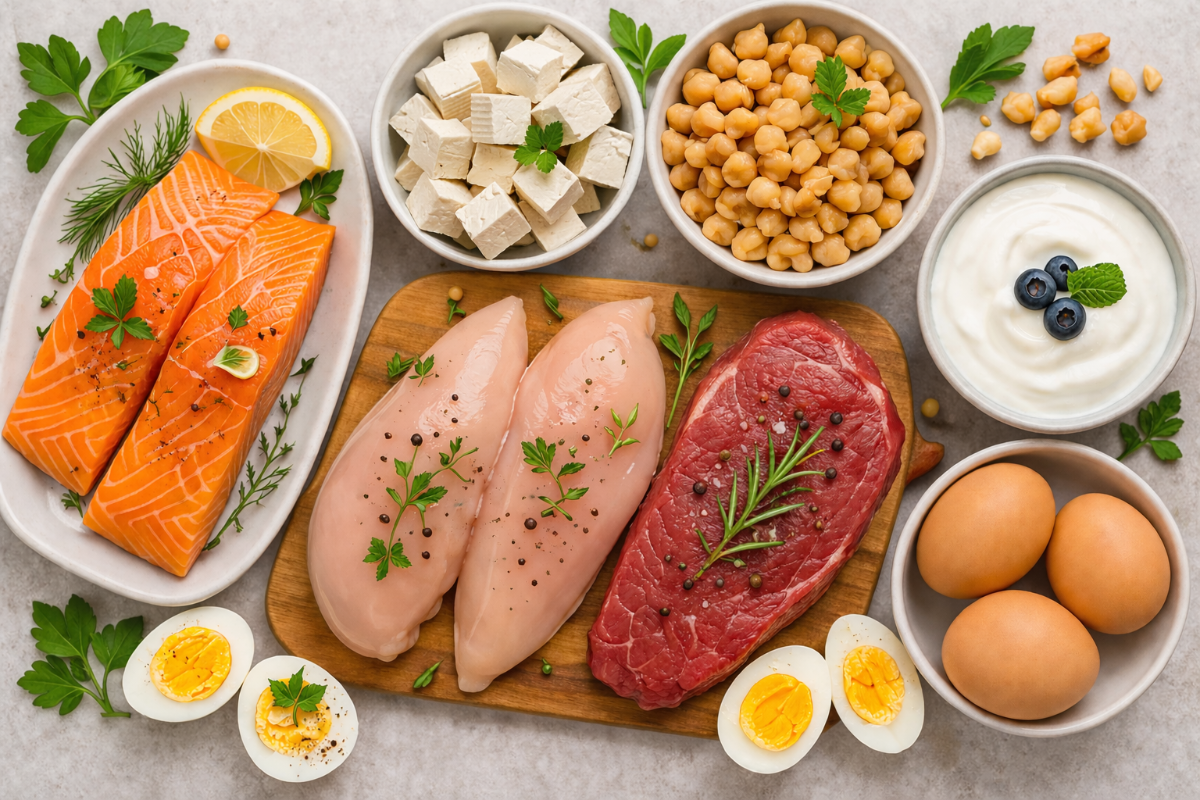
At Expo West, protein was everywhere again. As protein becomes part of the everyday diet, we are witnessing a market reorganisation.
At Expo West, protein was everywhere again. And the numbers suggest this is no passing fad: in the United States, 71% of Americans say they are trying to eat more protein, up from 59% in 2022, while 8 in 10 now prioritise protein at at least one eating occasion each day.
As protein becomes part of the everyday diet, we are witnessing a market reorganisation.
Growing consumer base
That reorganisation is visible in the breadth of the consumer base. Young gym-goers still matter, of course, but they are no longer the whole story. Gen Z increasingly approaches protein through prevention, having seen older relatives lose strength and autonomy.
Post-menopausal women are looking for high-quality, easy-to-digest sources. GLP-1 users, who now account for 19% of the U.S. population according to Numerator, are being advised to raise protein intake to help preserve muscle during weight loss.
For the first time, American consumers are paying more attention to protein than to sugar, led by Boomers at 62%, but closely followed by Millennials at 52% and Gen Z at 51%. In other words, protein has become a cross-generational health language.
Market response
The market is responding accordingly. Units sold of grocery foods carrying protein claims rose by 4.6% in the United States last year, even as the broader grocery environment remained sluggish. And the outlook is even stronger: according to analysis cited in the Financial Times, global protein demand could rise by 37% over the next five years as healthier eating patterns spread and GLP-1 usage grows.
Protein also shows something many food trends never achieve: pricing power. More than two-thirds of consumers say they are willing to pay 5% to 30% more for products with high-protein claims.
Consumers do not see protein merely as an ingredient. They see it as value. And a category becomes strategically important when buyers are willing to pay not only for taste or convenience, but for perceived function.
Innovation demand
Innovation is following demand. Searches tied to protein-related manufacturers were up 64% in the last three months of 2025, more than three times faster than overall searches. This is evidence that companies are actively looking for ways to formulate, source, and launch more protein-rich products. The pipeline is moving because manufacturers believe the demand will persist.
So why are consumers so receptive to protein in the first place?
Biology
The first answer is biological. Beginning around age 30, adults lose 3% to 8% of muscle mass per decade, with a faster decline after 50. Muscle is gradually replaced by fat, and what first appears to be a matter of physique becomes, over time, a matter of autonomy. Sarcopenia is one of the hidden causes of frailty in later life.
Add to that the simple fact that higher protein intake improves satiety, and one understands why protein resonates so strongly with consumers: it offers both an immediate benefit (satiety) and a long-term one (strength). It is therefore not surprising that protein recommendations are rising toward 1.2 grams per kilogram of body weight per day, or roughly 75 to 100 grams per day for many U.S. adults.
Culture
But biology alone does not explain the full strength of the protein boom. There is also a cultural reason. Protein is an additive proposition in a market that has been dominated for years by subtraction. Most food trends ask consumers to remove something: less sugar, fewer carbohydrates, no gluten, no animal products, fewer artificial ingredients.
Protein does the opposite. It asks the consumer to add rather than subtract. It speaks not the language of restriction, but of strength, satiety, recovery, and self-improvement.
Caveat
Yet not every protein proposition is winning equally. The Financial Times notes that plant-based meat alternatives have not benefited in the same way, with Beyond Meat sales expected to remain below their 2021 peak.
That is an important nuance: consumers want protein, but not necessarily in the form of meat analogues that are perceived as ultra-processed.
So, what should we expect next?
The next phase will bring more protein claims, but also more scrutiny. Consumers will continue to reward protein-rich products, but only if those products also taste good, digest well, and feel natural.
The winners will not be those who add the most grams to the label. The future of protein will belong to products that combine protein with balance, digestibility, naturalness, and pleasure.